/
/
Op zoek naar de “Big five” van De Alde Feanen

Op zoek naar de “Big five” van De Alde Feanen

The Big Five of De Alde Feanen

You don’t have to travel far for a remarkable wildlife experience. National Park De Alde Feanen is home to an impressive selection of animals that together form the park’s very own “Big Five.” Head out and discover these iconic inhabitants in their natural environment.

During a walk, bike ride or boat trip, you might come face to face with one of these special species if you are lucky. Look around carefully, listen to the sounds of nature and let yourself be surprised by the rich wildlife of De Alde Feanen. Perhaps you will spot one — or even several — of the Big Five.
White-tailed eagle

This enormous bird of prey has been breeding on the edge of National Park De Alde Feanen for several years. Do you see ducks and geese suddenly taking flight in panic? There’s a good chance the white-tailed eagle is nearby.

  • The white-tailed eagle is sometimes called the “flying door” because of its enormous wingspan (up to 2.4 metres) and broad wings.
  • White-tailed eagles only reach adulthood after five years and can live for several decades.
  • They mainly feed on fish, waterbirds and carrion.
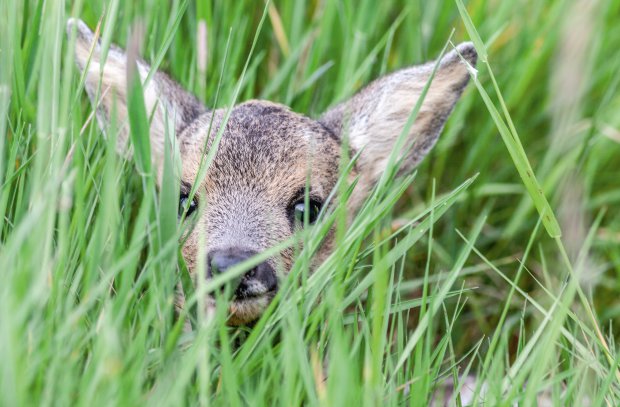
Roe deer

Roe deer

The roe deer is the largest mammal living in De Alde Feanen. During the day it often hides in vegetation, but it can regularly be seen in the grasslands, especially in the early morning and evening.

  • Roe deer are excellent swimmers.
  • Around 200 roe deer live in De Alde Feanen.
  • Only the males (bucks) have antlers.

Eurasian bittern

This rare heron-like bird mainly hides in the reed beds. It feeds on fish, mice and large insects.

  • The bittern is a master of camouflage. When threatened, it adopts a vertical posture and blends into the surrounding reeds.
  • In spring, if you hear what sounds like a foghorn in the reeds, it is actually the call of the bittern. Dat is de roep van de roerdomp!

Cormorant

The cormorant can be seen throughout the year in this area and mainly hunts fish underwater.

  • Hundreds of cormorants breed in the trees near De Grutte Krite each year.
  • Cormorants can dive to depths of up to 30 metres.
  • Their feathers absorb water while diving. To fly again, they must first dry their feathers — which is why they are often seen standing with their wings spread along the shore.
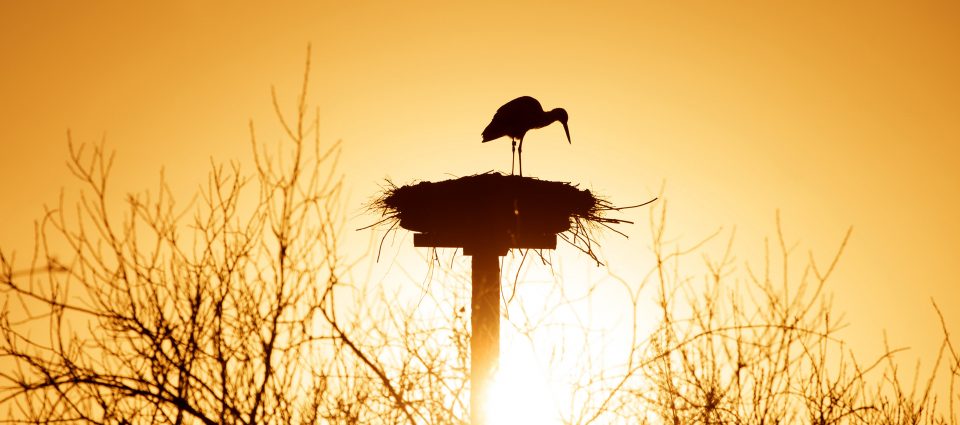
ooievaar bij Earnewâld

Ooievaar

The white stork is a striking bird that is hard to miss and can be seen throughout and around De Alde Feanen.

  • The stork is traditionally known as a bringer of good luck (and babies).
  • It was once almost extinct in the Netherlands but has returned thanks to reintroduction programmes.
  • Its wingspan can reach 2.2 metres.

Photo: Marcel van Kammen
