Grassland Management
De Alde Feanen contains summer polders, winter polders and peat dykes. They are managed in the following ways.
Summer polders
Summer polders are grassland polders that are submerged in the winter (1 November to 1 March). Laban, De Wyldlannen and Polder Grondsma used to be polder floodplains and were part of the approx. 100,000 hectares of this type of grassland existing in Friesland. At that time, there was virtually no flooding, because these areas acted as water buffers, and virtually nobody lived there. Later, these areas were almost all drained and surrounded with dykes. The remaining summer polders have the following ecological value:
- sleeping place for ducks and geese in winter;
- foraging and sleeping place for waders in the spring;
- breeding area for meadow birds;
- scenic and botanical values.
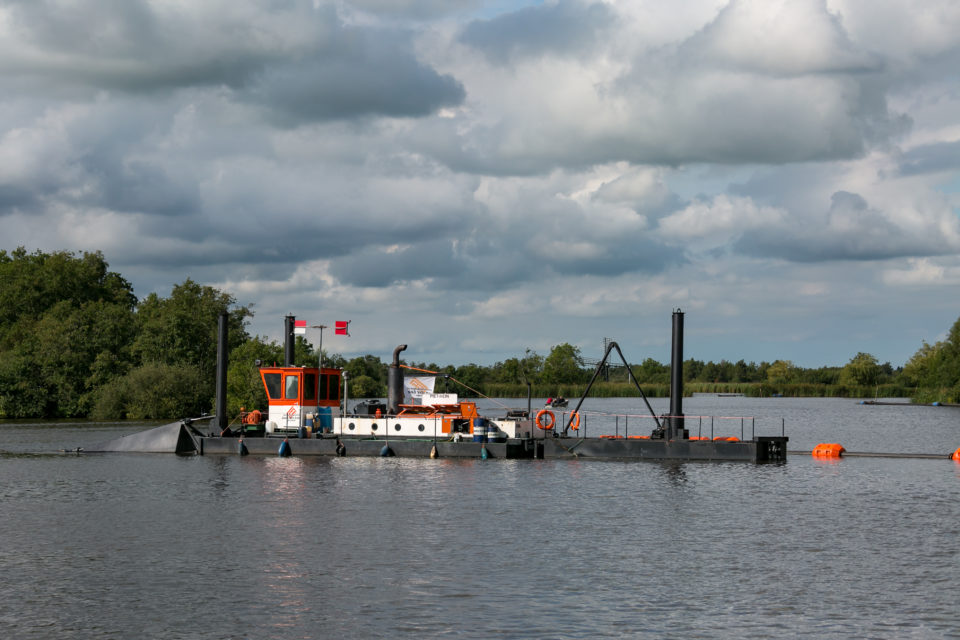
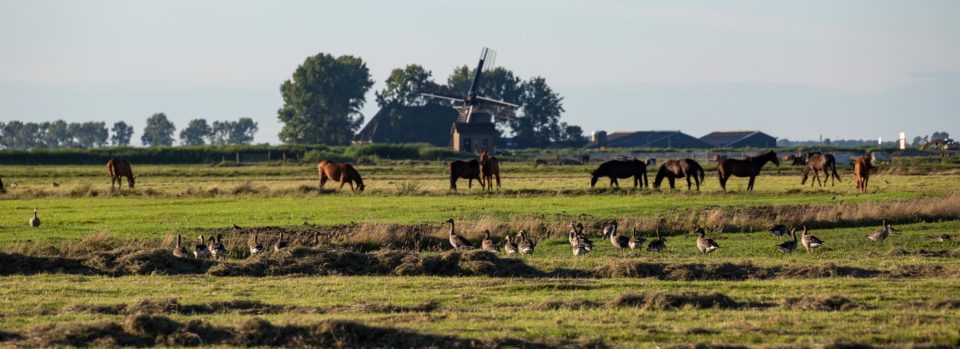
These summer polders are leased to farmers who pasture young calves and cattle during the summer months. Hay is made on non-fallow pieces of land by It Fryske Gea. Mowing is carried out after 1 July, after meadow birds have finished nesting. After mowing, a part is grazed by cows or sheep to create meadows. Since this is in fact farmland, the ditches, trenches and fencing are maintained. Managing the summer polders is time-consuming, because this is an area surrounded by water and everything (equipment, cattle and hay) has to be transported and removed by boat.
Winter polders
Winter polders are grassland polders that are drained all year round and are seldom under water. One of the most famous winter polders is De Bolderen, which is famous for its lowness, the groundwater seeping up, and unique scrub vegetation. Management is mainly focused on conserving the grassland. It is mowed every year after 15 June, and grazed with few animals over a large area.
The Peat dykes
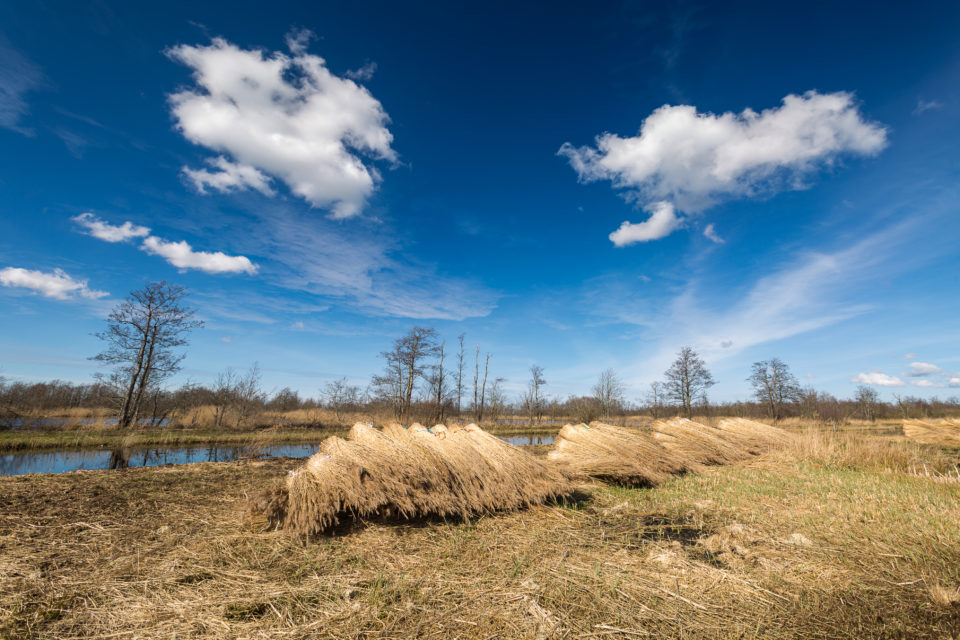
There are many peat dykes in De Alde Feanen. These are relics of peat extraction, since it was here that the peat was dried. In the past, many farmers from the surrounding area used the dykes for haymaking, and they are still mowed once a year. The main objective of the annual mowing is to preserve the landscape and its botanical values. Plants that occur here include marsh valerian, red-rattle and various grasses and sedges.
Swamp Forest Management
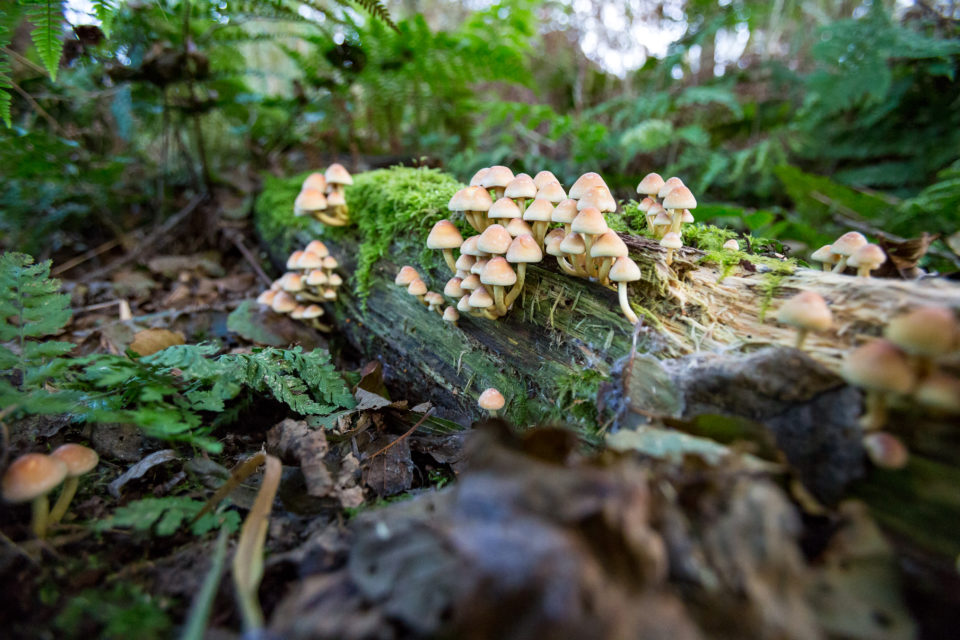
All the foregoing landscapes can turn into forest if they are left unmanaged. For swamp forests, the rule is: do nothing. The only management is small-scale pruning of overhanging branches over navigation channels, roads and paths. These marsh forests often have a surprisingly high ecological value, and are home to mosses, mushrooms and birds. From a landscape point of view, the marsh forests in De Alde Feanen are nature in its purest form. They were not planted but grew spontaneously.